
Professional development page gathers together the main take-aways of the CHAT-YOUTH events.
On this page you can find the condensed takeaways from our article “Help Is Just a Message Away”, six slide shows regarding the chat-services and the summaries of the past Community of practice meetings.
The first CoP meeting sketched out the form of the CHAT-YOUTH project, the second CoP meeting focused on artificial intelligence, the third CoP meeting brought together experts on crisis counselling and the fourth meeting was centered around the training of the chat counsellors. The fifth CoP facilitated the production of the consensus paper and the sixth CoP focused on reporting systems of the OCCS.
Here you can also find information on the past symposiums in Budapest, Ghent, Helsinki and Madrid.
10 Important takeaways for Chat Counsellors
Volunteer training – evidence-based guidance for youth chat support
- Your presence matters more than advice — feeling heard is the main goal.
- Anonymity helps young people open up about shame, fear, and suicidal thoughts.
- Low barriers (simple questions, short waits) keep young people engaged.
- Trust can be built through text using empathy, validation, and reflection.
- Helping does not always mean fixing — feeling calmer already matters.
- If a young person leaves suddenly, this is normal and not your failure.
- Training in relational skills matters more than formal qualifications.
- Chats can affect you emotionally — supervision and peer support protect you.
- Be transparent about confidentiality and safety limits.
- You are a bridge to support, not the whole solution.
10 Supervision Takeaways for Chat Services
Team and coordinator guidance for quality, safety, and sustainability
- Therapeutic alliance is the primary mechanism of impact in chat services.
- Immediate emotional relief is a valid and meaningful outcome.
- Dropout is inherent to anonymous chat work and should not be pathologized.
- Volunteer and professional counsellors show similar impact when supported.
- Emotional labour is structurally embedded and requires organisational care.
- Supervision functions as safeguarding for users and counsellors.
- Clear ethical protocols reduce uncertainty in crisis decision-making.
- Technical stability directly affects trust and service quality.
- Chat services function as gateways within broader care systems.
- AI tools should support — not replace — human judgement.
Why Invest in Online Chat Counselling for Youth?
Policy- and WHO-aligned evidence for funders and decision-makers
- Online chat services align with WHO stepped-care models as low-threshold, early-intervention support.
- They reach young people who do not access traditional mental health services.
- They provide prevention, crisis containment, and triage within youth mental health systems.
- Impact should be measured via emotional relief, engagement, and service linkage — not only symptom reduction.
- Volunteer-based services can deliver high-quality care when structurally supported.
- Sustainable funding is essential for ethical, secure, and reliable infrastructure.
- Investment in training and supervision protects service quality and safety.
- Inclusive and multilingual access supports equity and public mental health goals.
- Shared infrastructure increases efficiency and system-level integration.
- Ethically governed AI can extend reach while preserving human-centred care.
The takeaways are based on our peer-reviewed publication:
- Dewaele, A., Denayer, E., Cabello, M., Higuera-Lozano, I., Pitkänen, T., Felvinczi, K., Kaló, Z., Soininvaara, S., & Goossens, L. (2025). Help Is Just a Message Away: Online Counselling Chat Services Bridging Gaps in Youth Mental Health? (Visit an external site. The link opens in a new tab.) European Journal of Investigation in Health, Psychology and Education, 15(12), 257. https://doi.org/10.3390/10.3390/ejihpe15120257 (Visit an external site. The link opens in a new tab.)
SLIDESHOWS
These slideshows elaborate our reseach on various topics. In the first slidesjow, you will find context for the topics that are adressed.
- In-depth analyses on chat-conversations – context for the following slides
- The purposes for using a chat and the elements of agency – Janne Takala
- Chatting anonymously about suicide – Alix Helfer
- Chatting anonymously: Experiences of domestic violence – Sanni Heinonen
- Reporting systems for OCCS – Siiri Soininvaara & Sanni Heinonen
- A brief overview of Blue Line OCCS in Hungary – Mónika Rényi
SUMMARIES OF THE PAST COMMUNITY OF PRACTICE MEETINGS
Summary of the First Community of Practice meeting
CH@T-YOUTH: Community of Practice meeting
This first Community of Practice meeting provided updates on work packages, discussed the future of the project, and explored stakeholder engagement and webinar topics.
Work Package Updates:
- WP2: Identified 43 online counseling organizations, primarily national NGOs, across four countries.
- WP3: Analyzed chat conversations, comparing Finnish and Hungarian services.
- WP4: Focused on community building through international practices, webinars, networks, a symposium, and a consensus paper.
- WP5: Addressed project sustainability, toolkit development, professional guidelines, and policy recommendations.
Future of CH@T-YOUTH and the Community of Practice (CoP):
Participants emphasized the CoP’s role in exchanging information and tackling challenges like mental healthcare waiting lists and chat service integration into broader systems. Suggestions included expanding the network to more European countries, involving users and volunteers, and addressing topics such as AI, digitalization, accessibility, collaboration, and funding challenges.
Webinar Topics and Stakeholder Engagement:
Topics of interest include the theoretical frameworks and research underlying chat services, chat registration standards, and training for counselors. Participants highlighted the need for collaboration with public health and private sectors to attract youth and stressed funding sustainability for chat services. Engaging stakeholders, including users and volunteers, was encouraged to enrich discussions and improve services.
Summary of the Second Community of Practice meeting
CH@T-YOUTH: Community of Practice meeting on Artificial Intelligence
The CoP featured Tim Vanhove from Artevelde University of Applied Sciences, who presented on the basics of Artificial Intelligence (AI) and its potential applications in chat services. Participants discussed their personal opinions on AI, expressing mixed feelings. While some highlighted its benefits, others raised concerns about replacing human interaction, ethical considerations, and the transparency of identifying AI versus human responders.
Few organizations currently use AI, but examples included tools for providing tips to counselors. Participants explored potential uses of AI, such as generating conversation summaries, providing translations, and aiding in counselor training and research. However, concerns were raised about AI misleading users, legal accountability for AI-generated responses, and the need for robust quality control.
Overall, the discussion underscored the importance of balancing AI’s potential advantages with transparency, user preferences, and the irreplaceable role of human counselors in youth support services.
Summary of the Third Community of Practice meeting
CH@T-YOUTH: Crisis help through chat
The Community of Practice group continues to grow, with participants from diverse countries, including Germany, the Netherlands, Portugal, Malta, Spain, and Bulgaria. This session took the form of an intervision and featured Marie Van Der Cam from SAM vzw, who shared insights on managing crisis conversations involving suicidal ideation across various national contexts.
Professor Alexis Dewaele from Ghent University gave a presentation on the state of the art on suicide research and discussed the benefits of chat counseling for youth in crisis. Chat services enhance accessibility and anonymity, making it easier for young people to discuss sensitive issues like mental health or suicidal thoughts. The absence of non-verbal cues encourages deeper focus on content, while writing can have therapeutic effects. Chat counseling also gives clients autonomy to control the pace. Combining chat services with traditional therapy (blended care) improves overall support and flexibility for youth in crisis.
Marie Van Der Cam led a discussion on handling suicide in chat conversations. During breakout rooms, participants shared their approaches when suicidal ideation becomes apparent, revealing diverse strategies:
• Establishing a safe space: Creating a supportive environment and expressing genuine concern for the client.
• Risk assessment: Evaluating the severity of the client’s suicidal thoughts and depressive feelings to understand risk levels.
• Detecting and addressing signals: Encouraging counselors to express suspicion and make assessments when warning signs are observed.
• Exploring meaning: Understanding the client’s reasons for their thoughts and their ambivalence regarding their situation.
• Positive reinforcement: Acknowledging the bravery it takes for clients to discuss suicidal thoughts, helping build rapport.
• Permission for third-party contact: Seeking the client’s consent to involve emergency services or family members when necessary.
• Staying calm: Emphasizing the importance of counselors remaining calm and focused during conversations to provide a stable support environment.
• Protocol adherence: Following established protocols to ensure consistent handling of sensitive situations, especially when a client’s life is at risk.
Feedback from the breakout rooms revealed several insights. Participants noted similarities in approaches, with risk assessment and safety planning as common steps. However, differences emerged regarding timelines and protocols for contacting emergency services. Support for counselors was emphasized through regular debriefings and professional networks, highlighting the importance of preparation and clear protocols.
Summary of the Fourth Community of Practice meeting
CH@T-YOUTH: Training of chat counsellors
The recent Community of Practice meeting brought together representatives from organizations in Belgium, Finland and Hungary to discuss best practices in training chat counsellors. A key focus was on improving training methods, volunteer engagement, and coding systems to enhance the effectiveness of online mental health support.
After presentations from guest speakers Lise Clottes (Awel vzw, Belgium), Johanna Virtanen (Sekasin Chat, Finland), and Blanka Baranyai (Blue Line, Hungary), participants engaged in breakout sessions. These discussions provided valuable perspectives on the challenges, best practices, and methodologies for training chat counsellors.
- Challenges in training new counsellors
- Clarification of terminology: Avoiding jargon ensures a clear and accessible learning environment for trainees.
- Written expression skills: Transitioning from phone-based to text-based support can be difficult. Training should emphasize effective written communication.
- Retention of training impact: Maintaining the relevance of training over time is challenging. Refresher courses and mentorship programs help reinforce learning.
- Handling sensitive topics: Training on crisis situations (e.g., suicide, sexual abuse) can be emotionally demanding. Support mechanisms for trainees are crucial.
- Balancing training quality with engagement: While professional organizations face challenges in maintaining high training standards, volunteer-based services must also ensure accessibility and motivation.
- Effective training approaches
- Buddy/Mentorship system: Awel and other organizations highlighted the benefits of pairing new counsellors with experienced ones. This approach boosts confidence, encourages knowledge-sharing, and enhances trainee support.
- Theoretical & practical balance: A mix of theoretical learning, role-playing, and real-time chat simulations proves to be the most effective training method. Managing silence in conversations was noted as a key skill to develop.
- Live vs. online training: While COVID-19 forced a shift to online training, in-person sessions remain impactful. A blended approach combining live and digital formats offers the best results.
- Coding and analyzing chat conversations
- Coding systems: Many organizations use structured and open-text coding to analyze and improve chat counselling quality.
- Challenges in standardization: Aligning coding methods with international standards while maintaining internal consistency remains difficult.
- Training in coding: Ensuring all counsellors apply coding uniformly is challenging due to time constraints, but ongoing training can help bridge gaps.
- Adapting strategies for different audiences
- Targeted training: The effectiveness of counselling varies by demographic. More directive approaches might be suitable for younger users, but further research is needed.
- Transitioning from phone to chat counselling: Younger counsellors adapt more easily to text-based communication, while those experienced in phone support may require additional training.
The breakout discussions underscored the importance of structured, adaptable, and well-supported training for chat counsellors. The most effective training programs integrate mentorship, practical exercises, and a combination of live and online formats. Volunteer engagement remains vital, but training must balance high expectations with accessibility. Additionally, coding and data analysis continue to present challenges that require further development.
This meeting reaffirmed the commitment of organizations to continuous improvement and collaboration, ensuring high-quality support services for young people using chat-based mental health platforms.
Summary of the Fifth Community of Practice
CH@T-YOUTH: Consensus paper (17th of June 2025)
The fifth Community of Practice meeting built on the outcomes of the Ghent Symposium and provided an opportunity to refine and expand our collective work. Two main areas were addressed:
- Effectiveness and therapeutic quality
One of the key topics discussed during the symposium required further exploration. In this meeting, participants revisited this theme with a focus on:
- Identifying training, supervision, and integration practices that are critical for effectiveness in online chat counseling services (OCCS).
- Exploring ways to assess therapeutic impact despite challenges such as client anonymity and disengagement.
- Considering indicators that define a “complete” or effective single session from the client perspective.
2. Consensus statements
Draft consensus statements developed after the symposium — covering the topics of Usability, accessibility & user engagement; infrastructure, integration & technical resilience; sustainability & resource models; and ethical considerations, equity & crisis readiness — were reviewed. Participants provided feedback, proposed revisions, and worked towards translating these statements into concrete action points.
The discussions and analyses from this Community of Practice, combined with the findings from the Ghent Symposium, have now been synthesized into a paper that has been submitted for publication.
We thank all contributors for their thoughtful input and continued collaboration.
Summary of the Sixth Community of Practice
CH@T-YOUTH: Reporting Systems (16th of September 2025)
The sixth Community of Practice event focused on chat service reporting systems. Many chat services use a reporting system — also known as a statistics tool or coding system — to collect information about their operations. In this context, reporting systems refer to the various methods by which services collect anonymous data from conversations with young users. Typically, this takes the form of a questionnaire with pre-determined questions that counsellors complete after each conversation with a young service user.
The CoP began with a presentation of the results of a survey about the use of reporting systems. The survey revealed that these reporting systems are commonly used to gather demographic information about users, the reasons they use the chat service and the effects of the conversations. The presentation showcased the variety of approaches that chat services have towards reporting systems and demonstrated how services use the data collected through these systems.
Afterwards, participants broke out into groups to share their experiences of, and opinions on, reporting systems and the data they produce. The breakout room discussions yielded many interesting and insightful points. Topics of conversation included concerns about data safety and the difficulty of obtaining young people’s consent to collect anonymous data from their private conversations. The use of AI technology to collect data was also discussed. However, applying AI also raises many unresolved questions about data security and the accuracy of data collected using AI. It was also revealed that the reporting system sometimes serves as a debriefing tool for counsellors. Completing a reporting form can also be a way for counsellors to emotionally let go of the previous conversation and move on to the next one.
Budapest symposium
The final CHAT-YOUTH symposium took place in Budapest on Thursday 30th of October 2025. The meeting was a conclusion of our ambitious three-years of work on the project and provided an in-depth look at online counselling chat services, exploring the motivations and aims of our project, the challenges we encountered, the open questions that remain, and possible ways forward.

Ghent symposium
The CHAT-YOUTH consortium organized a symposium in Ghent, Belgium on Thursday the 22nd of May 2025. This symposium brought together experts and thought leaders in online mental health to discuss key issues, share innovative ideas, and explore the latest developments in the field. The theme of the symposium was Shaping the Future of Digital Wellbeing and Online Support. The event functioned also as a webinar.

Helsinki symposium
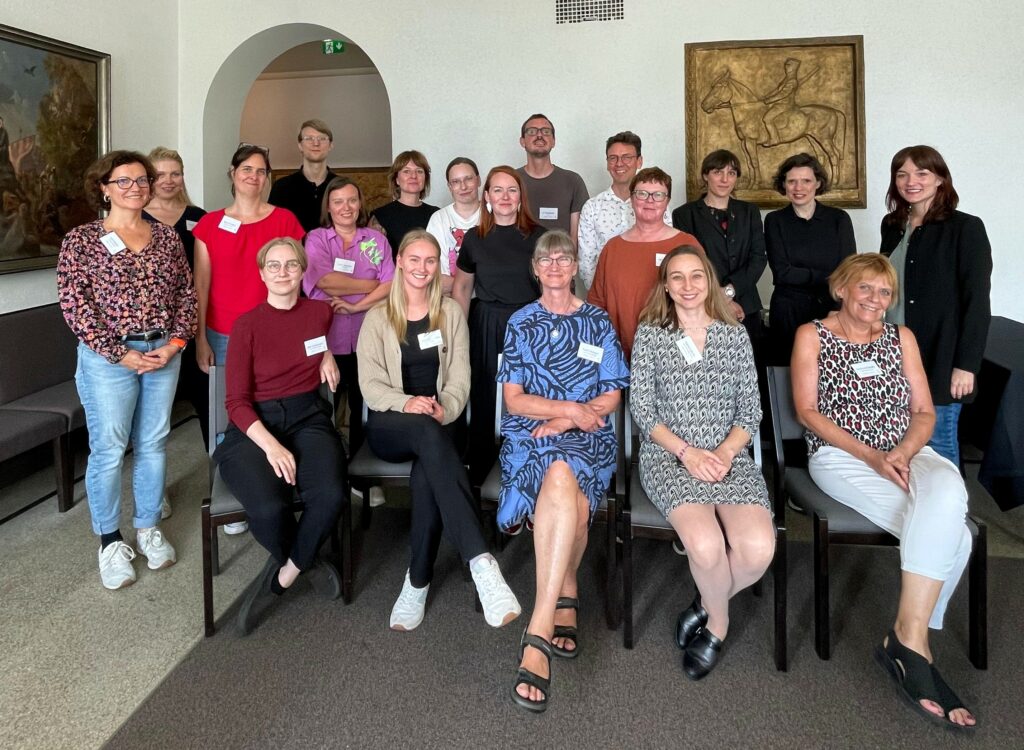
Helsinki CHAT-YOUTH meeting took place on Thursday 22.8.2024 at Tieteiden talo. During the day our multinational CHAT-YOUTH consortium shared research results and discussed the best practices for online councelling chat services (OCCS) for children and young people. We were joined by representatives from various councelling chat services and other experts on youth research and we were able to share observations from multiple chat platforms as well as the newest research findings on the topic. The theme of the meeting was Research and Practice.
Madrid symposium
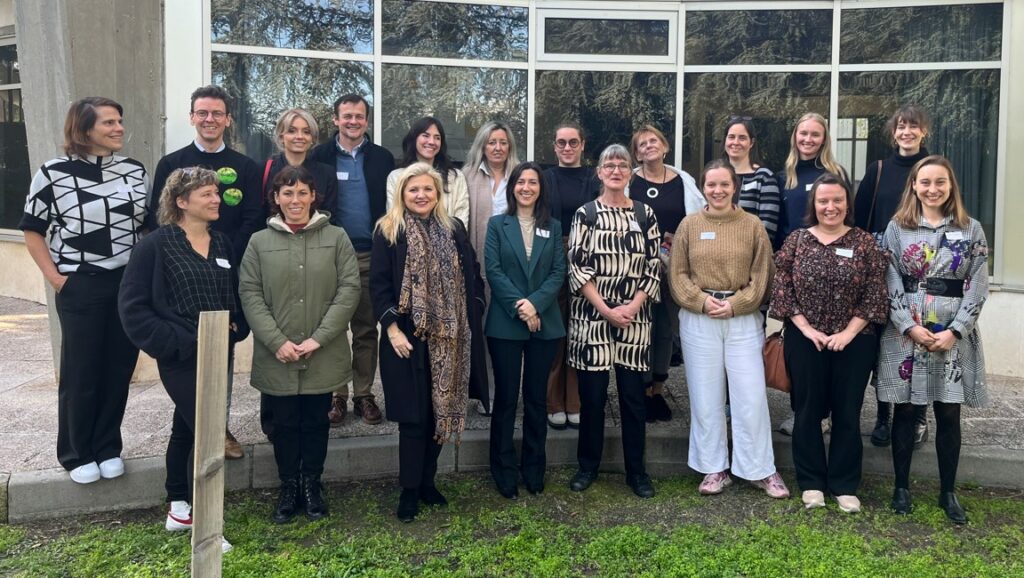
The hybrid kick-off meeting for partners and experts was arranged on Thursday the 25th of January 2024 in Madrid, Spain.
Project team
ERASMUS+ KA220-YOU – Cooperation partnerships in youth co-funded by the European Union 9/2023 – 1/2026.
Alexis Dewaele, Lien Goossens and Elke Denayer, Universiteit Gent, Belgium
Maria Cabello Salmerón and Irati Higuera Lozano, La Universidad Autónoma de Madrid, Spain
Katalin Felvinczi, Zsuza Kaló and Mónika Rényi, Eötvös Loránd University, Hungary
Tuuli Pitkänen, Siiri Soininvaara, Essi Holopainen, Virvatuli Uusimäki, Alix Helfer and Sanni Heinonen Finnish Youth Research Society, Finland


Tuuli Pitkänen
PhD, Adjunct professor
Research Manager
+358 41 517 8678
tuuli.pitkanen@youthresearch.fi